Before Making AI Fully Autonomous, Draw a Workflow You Can Inspect
The first design diagram for a reliable AI product should show inputs, checkpoints, tools, and stopping conditions.
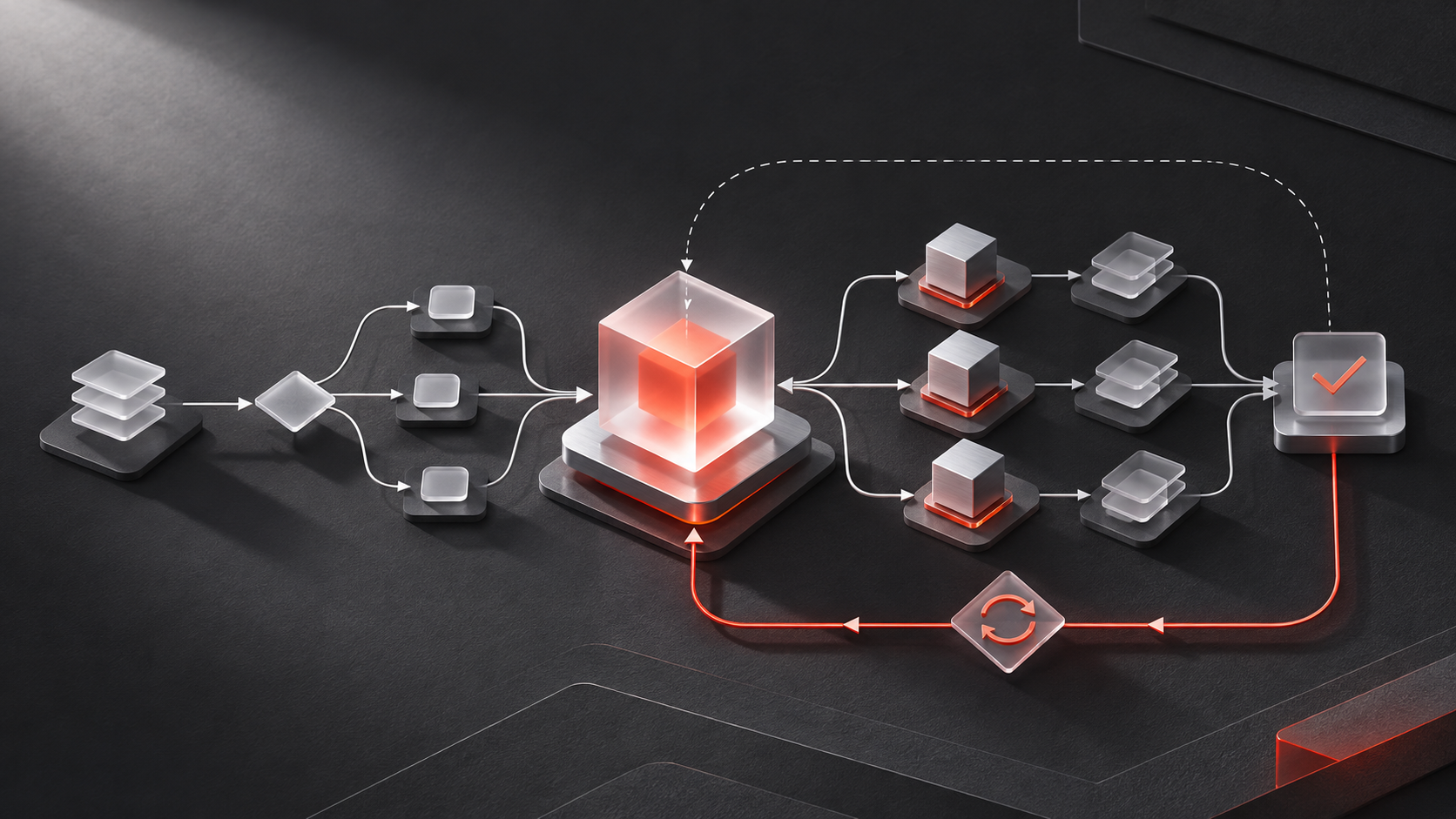
When product teams move from a chat box to AI that can take action, the most important change is not the interface. The system begins to affect the real environment: sending messages, changing files, querying accounts, or invoking business tools.
Draw the process first
Identify where inputs originate, where the model makes judgments, what each tool can change, and how every step confirms success. Refunds, publishing, deletion, and other consequential actions also need explicit human approval points.
Make errors visible early
Problems in a long chain accumulate. Intermediate results need structured checks rather than a final glance at whether the output merely looks plausible. Verifiable fields, automated tests, and limited trials often improve reliability more than elaborate prompting.
Stopping conditions matter as much as success conditions
A system needs to know not only how to continue, but also when to stop. Missing information, repeated failure, excessive cost, or a high-risk action should trigger a pause and human review.
Further reading: Anthropic, “Building Effective AI Agents”.